15 Camping Safety Tips (for families in RVs & tents)
Practicing camping safety techniques allows you to avoid stress and keeps camping fun! The enjoyment of a camp trip quickly disappears when someone gets injured or lost. With our list of camping safety tips for families who RV and tent camp, you’ll have a fun-filled adventure that will leave everyone happily anticipating your next family camping trip!
The top 15 camp safety rules for families are simple to implement when you know how!
#1: Use The Buddy System And Don’t Get Lost
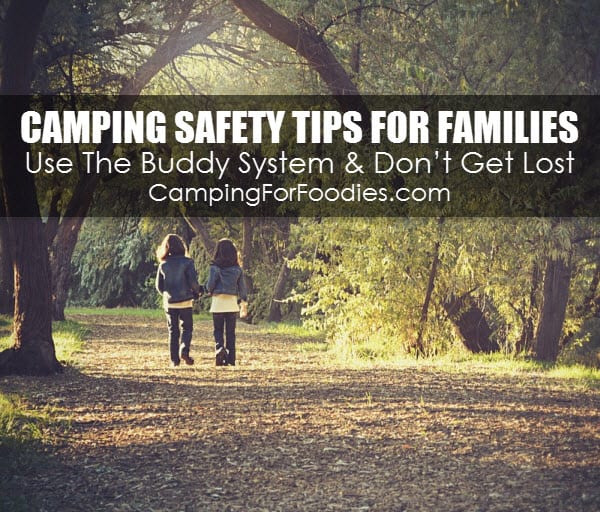
Unfortunately, getting lost can be a common and scary occurrence when younger kids wander away from the family campsite. Thankfully, it can be prevented with a little preparation.
- When you first arrive, point out the identifying landmarks surrounding your camp setup.
- Make sure everyone understands the importance of sticking together and using the buddy system … there is safety in numbers.
- Also, have a designated meeting place in case family members get separated.
- On unfamiliar hiking trails, adults can maintain locational awareness with a handheld GPS device.
It is probably one of your top priorities, so, we have an entire post dedicated to your personal safety while camping that includes choosing safe campsites, keeping valuables secure, safety statastics and security devices.
Helpful Gear
2-Way Radios
Walkie-talkie radios keep family members connected even though they may be out of sight from each other. These Long Range, 2-Way Radios have 50 channels protected from interference by 142 privacy codes each.
- The belt clip makes it easy to wear the radio on a belt and with up to a 36-mile range, these radios give everyone a little extra comfort factor when exploring the area.
- They can be operated with rechargeable batteries or AA batteries.
- These radios also have 10 weather channels (including NOAA) with alert features as well as an SOS siren.
Whistles
Wearing a whistle is an easy safety proactive measure. These Safety Loud Whistles With Lanyards blast out 120+ decibels of high pitch sound that overcomes ambient noise.
- Just make sure the kids know it is to be used as a safety device and not as a musical instrument.
- These have breakaway lanyards for additional safety.
- Using a GPS while hiking keeps you on track and aware of the path home even if the trail is overgrown and difficult to follow.
GPS
This Garmin eTrex 10 Worldwide Handheld GPS Navigator is a WAAS-enabled GPS receiver with HotFix and GLONASS support for fast positioning and provides a reliable signal.
- It comes with a preloaded worldwide basemap and features a 2.2-inch monochrome display.
- It can run up to 20 hours on two AA batteries.
#2: Eliminate Tripping Hazards
Some of the most common injuries on camping trips are caused by tripping over natural and man-made obstacles.
- Natural rocks, rugged terrain, uneven pavement, slippery wet surfaces, tent and canopy lines top the list of hazards.
- Lighting and flagging potential tripping hazards will help to avoid unnecessary injuries.
Helpful Gear
Flagging tape
Flagging tape has multiple purposes on camping trips.
- This Yellow Flagging Tape is a non-adhesive tape that is also available in other colors.
- It is great for marking your trail on hikes that have overgrown, hard-to-follow paths … sort of like breadcrumbs leading you home.
- At the campsite, using a brightly colored tape to flag tripping hazards that extend above the ground is another great use for it.
Stakes
Tarp and tent stakes can be especially difficult to see at night.
- These Glow-In-The-Dark Tent Stakes have T-tops that are phosphorescent and made from plastic resin.
- They absorb light during the day … then glow for 3-5 hours after dark.
- The steel pegs are 10.5″ and 8mm-diameter with a zinc galvanized finish to resist rust and corrosion.
Cord
Using glowing cord is a great way to see the cord after dark.
- This Glow-In-The-Dark Paracord Parachute Cord gets “charged” by exposure to the sun or other strong light.
- The longer the exposure time … the more light it absorbs … the longer the glow lasts. It comes in various colors and lengths too.
Lights
Keeping your camping area well lit is the best way to prevent tripping at night.
- This Luci Inflatable Solar Light is super bright and totally solar powered.
- You blow it up like a beach ball and hang it from just about anything because it is so lightweight.
- Make sure it is in direct sunlight during the day and your evening will be bright!
- They can be used like lanterns, flashlights and emergency lights.
We have more information on various types of campsite lights including the kind that are solar powered, battery powered, string lights, phone charging lights, remote controlled camping lights and lights you can wear! All of these types of lights improve campsite safety!
#3: Avoid Wild Animals
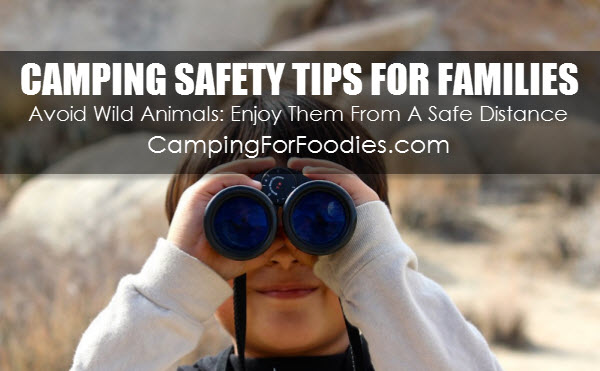
We all love our pets and can forget animals in the wild are, ummm … wild! So, avoid wild animals and don’t forget to protect your inquisitive family pets too. Keep your pets on a leash so they avoid contact with wild animals and fellow campers.
- Park rangers and campground hosts can usually provide information about the local wildlife.
- Properly store your food so you are not attracting wildlife into your campsite.
- Make sure the kids know they should not feed the wild animals or get too close to them; help them enjoy them from a safe distance with binoculars and cameras.
Helpful Gear
Binoculars
Older family members can use adult-sized binoculars but kids will appreciate a kid-friendly set.
- With 8X magnification, this Kid’s Binoculars Set is the real thing but designed especially for kids!
- The rubber surrounded eyepieces protect the face and eye area when in use.
- The extra coating provides better protection of the lenses and the overall rubber coating absorbs shock if the set is dropped.
Cameras
Budding photographers will love capturing wildlife from a distance and flowers up-close through the lens of a camera!
- This VTech Kidizoom Camera actually takes real digital photos but was designed with kids in mind to withstand drops and tumbles.
- It is a 2.0 mega pixels camera with 4x digital zoom, has a video recorder and voice recorder, photo collage templates as well as static and animated photo effects.
- It has built-in memory but also has a micro SD card slot for memory expansion.
Bear Safety Supply Kit
Some of the scariest wild animals at camping sites are wild bears. If you will be camping in near bear country, be sure to store food in a bear-safe container.
- Some campers use waterproof containers as safety precautions to lure bears away from people at campsites. The bear safety issue can be lowered by using odor-proof storage bags to stow food on your camping adventure.
- Some waterproof bags have a roll-top closure to protect food in inclement weather conditions as well as from animals and bugs. A bear bag is usually hung from a tree using ropes and some sort of pulley system. Their effectiveness is a hotly contested topic.
- Developed campgrounds with these potential dangers often have bear boxes where people can store food in large steel boxes located at their campground site for added safety measures. In backcountry locations, many people use a portable enclosed shelter like this Lightweight Bear Resistant Food Canister.
- Many national parks don’t allow the use of bear spray or pepper spray. It’s a good idea to check all of the local rules before heading out on your camping experience. If you come in direct contact with a bear, you need to know what to do (and what not to do) to avoid provoking the animal. We have a list of essential camping safety tips you need to read. Check out our camping bear safety tips … there really are life-saving tips in there!
#4: Practice Water Safety

There are specific safety tips for camping near water. Fishing, boating and swimming are popular camping activities.
Helpful Gear
Life Jackets
- Prepare for water safety in advance of your trip with age/size appropriate flotation devices.
- Make sure the kids know they should not drink the water when swimming too.
- This Infant/Toddler Life Vest is designed to fit infants and toddlers weighing approximately 30 pounds; it has a quick release buckle over the entry zipper for added security as well as an adjustable crotch strap.
- This Stohlquist Adult Fishing Floatation Device is designed specifically for fishing; it has tool pouches, accessory pockets and “fold-down work surfaces” for the fishing enthusiast.
#5: Keep Food Safe

Most people camp during the summer when outside air temperatures are warm. Keeping perishable food at safe temperatures can be a challenge when it comes to ample cooler and/or refrigerator space for the entire camping trip.
- Pre-cool your coolers and refrigerators BEFORE loading food into them. Here are some additional solutions for keeping cold foods safe.
Helpful Gear
Freezer Packs
Fully freeze the packs in your home freezer before placing them in your cooler.
- Reusable Freezer Packs can be layered in your cooler to keep food cold without causing the problem of water-saturated food from melting ice.
- These packs are BPA-free and non-toxic.
- The compact design and dimensions of 7″x3.2″x1.2″ allow you flexibility in arranging your cooler.
Coolers
Using an insulated cooler with wheels is good practice for food safety as well as your back!
- The Coleman 100 Quart Wheeled Cooler is great for weekend camping trips; the technology maintains ice in temperatures up to 90°F for up to 5 days. It has two types of handles so you can either carry it or pull it and when the lid is closed, you can use it as a “side table” with cup holders!
- For longer periods of time, this Coleman 40 Quart Iceless Electric Cooler is a great option. You use it like a small refrigerator or an iceless traditional cooler. It cools the contents to 40° below the surrounding temperature by using 12-volt power from your vehicle outlet (like the cigarette lighter).
- Additional power options allow you to connect the cooler directly to a 12-volt battery using this Car Cigarette Lighter Socket Adapter.
- You can even plug it into a 110-volt standard home outlet with this optional Coleman Thermoelectric Cooler 120-Volt Adapter.
- Expensive but it’s crazy good! A friend of ours went on a week-long hunting trip and still had ice at the end of his trip! The Yeti Tundra Cooler keeps contents cold for a REALLY LONG TIME without power!
- It uses a “ColdLock Gasket” that forms a super tight seal keeping cold in and locking heat out.
- The insulation is pressure-injected giving this cooler off-the-charts ice retention.
- Yeti’s are designed for rugged outdoor adventures and are extremely durable.
- The optional Badger Single Axle Wheels kit fits Yeti Tundra 35-160.
Get tips on how to pack a cooler for maximum efficiency and safety.
Camper Refrigerators
Camping in an RV usually makes keeping food at safe temperatures easier than working out of a cooler. Although, some RV refrigerators are not super efficient especially when they are fully packed without good airflow.
- This Camco Fridge Airator is a high volume air circulator designed to evenly cool your RV refrigerator.
- It also absorbs odors through its replaceable charcoal pack.
- It has an on/off switch to save power when it is not in use and runs on batteries.
There is no worse place to get food poisoning than when you are out in the wild! You should know how to properly pack a cooler and store your camp meals. Get more camping food storage tips to keep your family safe on your trips!
#6: Avoid Insects And Poisonous Plants

The famous quote from Benjamin Franklin, “An ounce of prevention is worth a pound of cure”, is the answer to dealing with insects and poisonous plants on camping trips.
- Each family member should know what the local poisonous plants look like so they can avoid them if they encounter them.
- Poison oak, poison ivy, and sumac are the most common but research your particular area; local campground hosts are good resources regarding local conditions.
- Ultimately, you want to identify and avoid poisonous plants and deter insect bites and stings which can be particularly dangerous to people with allergies.
- Keeping insects away from the campsite area is a good first defense in avoiding problems resulting from bug bites.
Helpful Gear
Insect Repellents
The Cutter Citro Guard Candle repels mosquitoes and other flying bugs for up to 40 hours.
- The 3-wick candle is made with real citronella oil, has a wind-resistant design and a wide base to prevent tipping.
Protecting your campsite area from bugs is a first defense; protecting your body is a second defense.
This Repel Natural Insect Repellent has a cool, refreshing and strong scent that is pleasant to humans but not to bugs.
- It repels mosquitoes and deer ticks for up to 6-hours and contains oil of lemon eucalyptus which is DEET-free.
According to the Center for Disease Control, ticks are attracted to the carbon dioxide you produce when you breath and the lactic acid you produce when you sweat. Source. If a tick is infected with lyme disease and bites a human, it can transmit the disease causing a broad-spectrum of symptoms including fevers, headaches, dizziness, fatigue and skin rashes. Most cases can be cured in 2-4 weeks with oral antibiotics.
- Experts recommend avoiding areas where ticks are present as well as wearing long pants, long sleeves and hats as a barrier between you and the bug.
We have an entire post dedicated to the subject of winning the battle over bugs at the campsite! See how to keep bugs away including flies, mosquitoes and other insects!
#7: Practice Campfire Safety
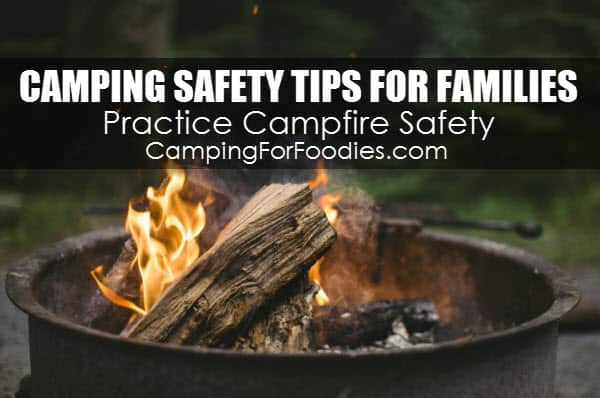
Everyone seems to love roasting marshmallows around a crackling campfire. But, without proper precautions, campfires can cause fire safety issues; here are a few things to consider:
- Use safe starters to light your campfire … never use gasoline or other flammable fuel.
- Stay a safe distance from your campfire … especially small kids.
- Wear protective gear when cooking with your campfire.
- Keep your fire small and contained and within your fire pit.
- Have a fire extinguisher or bucket of water ready in case your campfire accidentally gets too big.
- Remove tripping hazards near your camp fire rings.
- Fully extinguish your campfire before going to bed or leaving your campsite.
Helpful Gear
Fire Starters
Rutland Safe Lite Fire Starter Squares make it easy to start a campfire when you don’t have kindling.
- They even work when wet!
- If you are planning to cook over your campfire, these starter squares won’t flavor food and won’t flare up.
- They were designed to meet the strictest air quality codes and are made from recycled wood chips and wax which are non-toxic.
Thinking the kids might get a kick out of making their own camping fire starters? Check out this fun project to make your own homemade fire starters for you next camp trip!
If you think you might want more options for commercially made camping fire starters, you will find tons of super cool options available on the market!
Roasting Sticks
Kids of all ages love roasting marshmallows! Maintaining a safe distance from the campfire is easy with telescoping sticks.
- This Marshmallow Roasting Telescoping Stick Set includes 5 forks and a canvas travel bag.
- When fully extended the forks measure 34″ and retract to 10″ for travel and storage.
Sure you could roast marshmallows for the ordinary s’more but why would you when you can try new and interesting smores ideas?!? You’ll want to get creative with these Campfire Smores Recipes: 10 Mouth-Watering Smore Variations!
Cooking Gloves
These US Forge Lined Leather Welding Gloves are designed to provide protection from the extreme heat of welding making them more than sufficient around a campfire. They are durable, pliable and have a comfortable lining.
When cooking with your campfire, adult supervision is the name of the game.
- Kids should be carefully supervised and limited to age-appropriate tasks.
- Adults should handle hot cooking accessories, like Dutch ovens and grill grates, with heat-tolerant gear.
Shovel
This Rugged Folding Camp Shovel is actually a multi-tool that can be used as a shovel, saw (serrated edge to saw through roots) and axe (sharpened edge to chop).
- When fully extended, it measures 23″ and folds to 9″x6″ for storage and transport.
Fire Extinguisher
We carry several multipurpose extinguishers on all of our camping trips.
- Place your fire extinguisher in an easy-to-access location at your campsite.
- Your entire family should know where it is and how to use it.
- This Kidde Pro 210 Fire Extinguisher fights all types of fire (trash, wood, paper, liquids, electrical equipment).
- It is fully rechargeable and the pressure gauge allows you to do an immediate pressure status check.
A Few Campfire Safety Tips
As Smokey the Bear says … Only you can prevent wildfires.
- Never leave your campfire unattended!
- Be sure to fully extinguish your fire before going to bed or leaving your campsite.
- Douse it with water (keep a full water bucket nearby) and stir it with a shovel until it is no longer smoldering.
- In the absence of water, bury the fire by stirring dirt or sand into the embers.
- Continue the process until the entire area is cool to the touch.
Once your fire is safe and secure, don’t forget to have fun and play some campfire games! We have a post with 10 fun activities and campfire games for families and kiddos!
#8: Prevent Heat And Cold-Caused Illnesses

When camping in warm-hot conditions, protect your family from dehydration and sunburns. Another way to stay safe from the heat is by staying out of direct sun on hot days.
- If you have an RV with an awning, extending it is an easy way to provide instant shade.
- In high winds you’ll want to bring in your awning, but, in moderate winds you should know how to keep RV awnings from flapping. Try this simply DIY hack!
When camping in cold conditions protect your family from hypothermia. Here we’re focusing on summer camping but cold weather camping has special challenges which we provide lots of tips for in these other blog posts:
Stay Hydrated
Make sure your camping destination has an ample supply of drinking water.
- You may need to carry your own (or extra) supply if you don’t have access to drinkable water … like when boondocking off-the-grid in remote locations. Like when you go camping in National Forests.
- We carry more water than we expect to need in several jugs.
Helpful Gear
Water Containers
This Aqua-Tainer 7-Gallon Rigid Water Container has a screw-on vent and a hideaway spigot for on-demand water dispensing.
- Their molded contour grip makes them easy to carry.
It is always important to follow good camping safety tips, but it is especially important if you are boondocking in remote areas away from emergency services. Get tips in our Boondocking: How And Where To Go Dispersed Camping post and keep your family safe as you enjoy the great outdoors!
Hiking is a family-friendly camping activity but can potentially cause dehydration … Drinking plenty of water before, during and after the hike prevents it.
Hydration Packs
Providing each hiker with a constant supply of water keeps everyone safe. We use a combination of individual sized water bottles and reusable hydration packs.
This CamelBak Kids Mini Hydration Pack is designed just for kids.
- The breathable back panel makes it lightweight and the sternum strap features a built-in safety whistle.
For adults, the TETON 2-Liter Hydration Backpack only weighs 2 pounds when empty and has a low-profile athletic cut.
- It has multiple pockets to carry extra gear and the 2-liter hydration bladder has triple-heat sealed edges and a 2″ opening for easy filling and cleaning.
Cooling Towels
A few years ago we were camping in Yosemite National Park over the July 4th holiday and it was H-O-T during our hikes! The rock formations are so beautiful that I could hardly stand it but my enjoyment of the experience quickly began to deteriorate as the day went on because I was not prepared for the lack of shade along our hike path.
I did not overheat thanks to Cooling Towels, but I did hike slower than normal.
- That was on our first day … on the subsequent days of our trip, we chose to begin our hikes in the very early morning so we were finished when the heat of the day arrived.
- I totally enjoyed every hike and rotated between two cooling towels to keep my body temperature safe.
If you have not been to Yosemite National Park … you really need to get there at some point in your camping life! It is one of the most beautiful places on the planet! And, I am saying that as the local Arizona camping girl who has the Grand Canyon in my own backyard! Check out our post on Yosemite National Park camping … it has a VIDEO and tips on what to see and do. You’ll see why I give this place a “Must See Bucket List Rating”!!!
Hats
Sun Hats are a great way to keep your head and neck shaded from dangerous heat and rays from the sun.
- There are tons of styles, sizes and colors to fit men, women and kids.
- Some even have removable neck and face flaps to give you greater protection than a regular wide-brimmed hat or baseball cap.
- Protect your eyes with a good pair of sunglasses.
Fans
Keeping air circulating can help cool your body temperature when at camp in confined spaces like in tents and under awnings … using a Camping Lantern With Ceiling Fan is great for that.
Air Conditioners
You can also use a Personal Portable Air Conditioner to cool your body and immediate surrounding area.
- These come in a 110V size or a 12V size which is great for camping.
Sunscreen
Wearing sunscreen is a non-negotiable issue for our family. We love our Arizona sun-filled days but we need to protect from harmful UV rays.
- This Sun Bum SPF 70 Continuous Spray Sunscreen is a moisturizing sunscreen that protects from harmful UVA/UVB rays while enriching your skin with Vitamin E. It is water-resistant so sweating on your hike is no problem! You can go swimming with it too!
During outdoor activities, dermatologists recommend you wear sunscreen and use at least SPF 30 which blocks 97% of the sun’s UVB rays. Source. And, if your outdoor activity involves immersing yourself in water sources (like swimming, surfing, water skiing) be sure to use a water resistant sunscreen that won’t wash off as quickly, but, still needs to be reapplied every two hours.
#9: Stay Clean And Sanitized
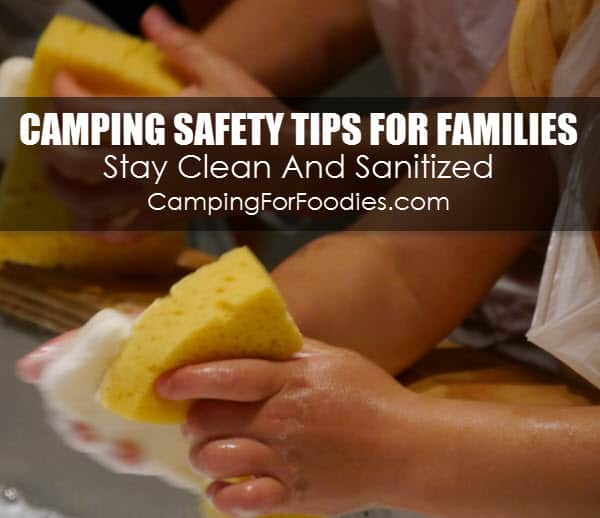
Illness from inadequate hand washing on camping trips is easily avoided by using alcohol-based hand sanitizers as well as providing a conveniently located hand washing station.
- Make sanitation convenient for your family to wash their hands throughout the day.
Helpful Gear
Portable Sinks
This Portable Camping Sink is a unique set-up that allows you to pump the water with your foot (that’s the hands-free part) so your hands are free to suds up and rinse!
- Having the built-in towel holder and soap dispenser ensures your family is actually getting clean rather than just “rinsing the dirt away” … Yes, I’ve seen big and little kids alike do that maneuver … Ugh!
Wipes
Sanitizing wipes are the bomb! These Wet Ones Antibacterial Wipes kill 99.99% of germs, are hypoallergenic and enriched with skin-conditioning aloe.
- Because they are portable and convenient, they get used!
- These single packs are easily carried in a backpack or pocket … That’s a good thing!
You can use hand sanitizer anywhere. Tucking little Purell Travel Sized Hand Sanitizers around the campsite means there is no excuse for germs!
- These Jelly Wrap carriers make it convenient to attach a bottle to backpacks and other gear too!
#10: Prepare For Medical Needs
You don’t want to be out in the wilderness to find you are out of adhesive bandages!
- BEFORE your trip, restock expired medicines/ointments as well as used/missing items in your first aid kits, like gauze pads and Band-Aids.
- If you have medical conditions that require medications, bring an ample supply. You don’t want to run out of your meds that require refilling at a pharmacy.
- You can know exactly what to do in every first aid situation if you download the FREE Red Cross app on your phone. It is just one of the best camping apps you should have before your next trip!
Helpful Gear
First Aid Kits
Having a first-aid kit designed to handle minor medical emergencies is a good thing to keep in your vehicle and at your campsite.
- This Compact First Aid Kit is equipped with various styles of bandages, prep pads, cleansing wipes, closure strips, cold compress, emergency blanket, first aid tape, tweezers, blister relief pad, scissors, gloves and more!
#11: Avoid Weather Hazards

Weather can be unpredictable. Before your trip, check the weather forecast for the area where you will be camping … then use a weather alert radio to stay informed of any hazards throughout your trip.
Follow these preventive measures:
- Don’t set up camp near standing dead trees that may blow over and injure your family in a storm.
- Take protection from lightning by avoiding metallic objects and high ground especially isolated tall trees. If you are staying in a campground or RV park with traditional building structures, those will probably be the safest location in a lightning storm; otherwise, your vehicle will most likely provide you the best protection. The National Weather Service has more lightning safety tips.
- Take cover in a protected area during windy storms and avoid natural flying debris like tree limbs, as well as man-made items like overhead tents and awnings.
- Rocks and paved surfaces can get slick during rainstorms, take precaution and don’t slip.
- Plan for safe indoor activities in case bad weather changes your normal outdoor plans.
Helpful Gear
Radios
Using a weather alert radio keeps you informed about hazards.
- The American Red Cross Weather Alert Radio has power options including:
- (1) built-in rechargeable battery,
- (2) hand crank, and
- (3) solar panel.
- This unit can also charge your smartphone via USB!
When unexpected bad weather changes your outdoor plans, relocate to safety and comfort … move the party inside a sheltered area. Be prepared with rainy day camp games and keep the fun in your trip.
#12: Wear Appropriate Clothing And Footwear

Have you ever seen someone hike in flip flops? We have … and, it is NOT a pretty sight!
Make sure you pack proper clothing and footwear for your planned activities. Sturdy shoes and hiking boots are some of the most important items on your camping gear list.
Consider sun protection clothing too. The Ultraviolet Protection Factor (UPF) is a rating that represents the amount of UVA and UVB radiation that passes through fabrics and reaches your skin. Learn more from the Skin Cancer Foundation.
Helpful Gear
Sun Hats
Unless you are bald, you can’t apply sunblock to your head but it still needs to be protected from harmful sun exposure. So, just make a sun hat part of your camping attire.
Sun Protection Clothing
If you don’t want to apply sunscreen, you should consider wearing long sleeved sun protection shirts.
- They come in lots of camping-friendly styles for kids, men, and women.
- You’ll want to look for a 50+ UPF rating for the best UV protection.
Hiking Boots
A good set of hiking boots can prevent twisted ankles and blisters!
- We recommend waterproof hiking boots that have good arch and ankle support.
- Merrell has popular styles for kids, men and women.
Check our winter camping clothing post if you will be camping in cold weather
#13: Practice Propane Safety
(CO) Carbon monoxide poisoning is something to take very seriously. It can kill!
- The most common sources of carbon monoxide emissions from camping propane comes through the use of heaters and cooking equipment.
- Additionally, gas-powered equipment, like generators or even your vehicle, can produce dangerous carbon monoxide. Get more RV tips and hacks on this subject and more.
- Because carbon monoxide has no color, taste or odor, it is almost impossible to detect this poisonous gas without a device.
This First Alert Battery Powered Carbon Monoxide Alarm uses an electrochemical carbon monoxide sensor to monitor the surrounding air and when triggered, produces a loud 85-decibel alarm.
- This unit is powered by a 9 volt battery which is included.
#14: Prepare In Advance
Before you go, there are a few odds and ends to address:
- Get vaccinated. Cuts and puncture wounds leave open doors for bacteria infections. So, your doctor may recommend tetanus shots and other vaccinations prior to your next camping trip.
- Tell someone where you will be camping and hiking, leave them contact information in case of an emergency. Sign in and out of the log located at the trailhead.
- Know the location of the nearest hospital in case you have to rush there for an emergency.
#15: Use A Checklist
Using a checklist helps you stay organized and stress-free!
- We have a FREE Printable Camping Checklist that will help you to be prepared for your awesome camping adventures.
- We also have an awesome RV Tool Kit Checklist if your camping adventures will be in a home on wheels!
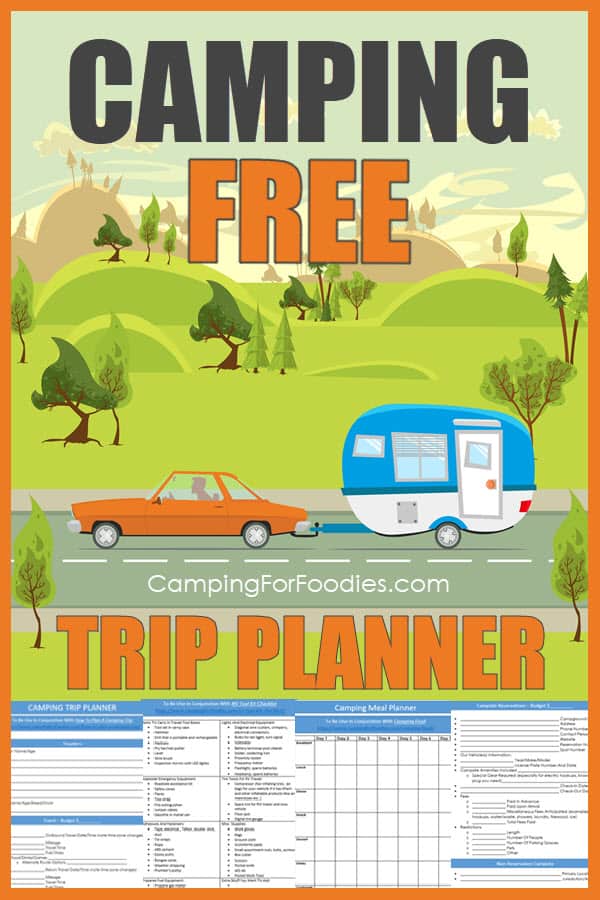
- Get more tips on how to plan a camping trip and a free printable trip planner too.
- Our FREE Printable Camping Trip Planner will help you plan every aspect of your trip.
Make your next trip stress-free with a little pre-planning. Get your copy of our FREE printable camping trip planner template!
What do you think?
Leave me a comment, question or suggestion below. I’d love to hear from you so let’s chat.